
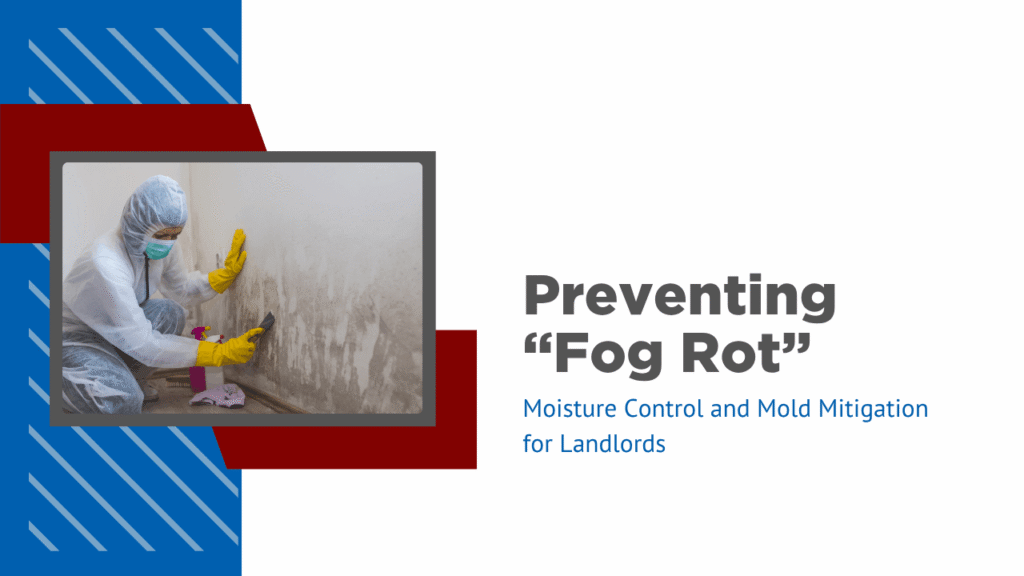
What is fog rot, and is it causing harm to your rental property?
The Bay Area’s iconic fog is part of its charm, and we love it of course, but for rental property owners, that fog presents a persistent and often underestimated risk. The same cool, moisture-laden air that defines neighborhoods from the Sunset to the Richmond can quietly degrade building materials, invite mold growth, and create costly maintenance issues if not properly managed.
Among experienced landlords and contractors, the term “fog rot” has become shorthand for moisture-related deterioration driven by chronic damp conditions. While not a formal building science term, it captures a very real phenomenon: wood decay, microbial growth, and indoor air quality problems caused by prolonged exposure to high humidity and inadequate ventilation.
For landlords and real estate investors, preventing fog-related moisture damage isn’t just about maintenance. It is about investment protection, tenant health, and regulatory compliance.
Let’s take a look at how moisture behaves in Bay Area buildings, where problems typically start, and how to implement effective mitigation strategies.
Our Takeaways:
|
How to Understand the Moisture Problem in the Bay Area
The Bay Area’s climate creates a unique risk for owners. Here’s what we’re working with:
- High ambient humidity, especially in coastal neighborhoods
- Cool temperatures, which slow evaporation
- Frequent fog intrusion, bringing moisture into building envelopes
- Older housing inventory, which is often lacking modern vapor barriers or insulation
Unlike hot, humid climates where air conditioning dehumidifies indoor air, many of the Bay Area’s buildings rely on passive systems. That means moisture can accumulate gradually, and it is often unnoticed until damage is visible.
What Is “Fog Rot,” Technically?
It’s a fun term.
Fog-related deterioration typically shows up as one of these following problems:
- Wood rot caused by fungal activity in damp materials
- Surface and subsurface mold growth
- Corrosion of metal components
- Degradation of finishes (paint, drywall, flooring)
The underlying driver is sustained moisture levels above safe thresholds. This generally occurs when relative humidity stays above 60% for extended periods.
Where Moisture Problems Start
Understanding where moisture accumulates is critical to prevention. Even if you’re inspecting your property regularly, the danger signs can be easy to miss. Here are some of the ways that we work preventatively to detect and prevent problems that originate with Bay Area fog.
- Exterior Walls and Cladding
Older buildings often lack modern weather barriers, and they don’t always have proper flashing around windows and doors. There aren’t always adequate drainage systems, either. Fog can condense on cool exterior surfaces and slowly infiltrate wall assemblies.
- Windows and Window Frames
Windows are especially vulnerable. Single-pane windows, which are common in historic Bay Area buildings, are especially prone to interior condensation, wood frame deterioration, and mold growth along sills.
- Bathrooms and Kitchens
These are the highest moisture-generating areas in any rental property, for obvious reasons. There’s water in sinks and showers. Common issues include poor ventilation, lack of exhaust fans, and steam accumulation.
- Crawl Spaces and Basements
These areas are particularly vulnerable because they stay cool and damp, they often lack airflow, and they can absorb moisture from soil.
- Roof and Attic Assemblies
Fog and marine air can penetrate poorly sealed roofs and condense in under-ventilated attics.
The Cost of Ignoring Moisture
Unchecked moisture leads to a number of problems, including:
- Structural damage (wood rot, framing degradation)
- Mold remediation costs
- Tenant complaints and turnover
- Potential habitability claims
Under California law, landlords are required to maintain habitable living conditions, which includes preventing dampness and mold conditions that affect health. Failure to address these issues can escalate from maintenance problems into legal problems. The law has given local governments more of a mandate to enforce habitability standards, and tenants know that.
Moisture Control and Implementing a Systems-Based Approach
Effective moisture control isn’t about making a single fix and moving on. This is something that requires constant attention. Owners need to manage the entire building interior and exterior, paying particular attention to the airflow system.
- Improve Ventilation Strategically. Ventilation is the first line of defense. Install or upgrade bathroom exhaust fans (vented outside, not into attics). You’ll also want to ensure that kitchen range hoods are functional and externally vented. We also recommend that owners promote cross-ventilation in units where possible. Ambitious owners may want to take things a step further and install continuous low-level ventilation systems in problem buildings. Ventilation removes moisture at its source, preventing accumulation.
- Control Indoor Humidity. Tenants generate moisture through cooking, showering, laundry, and even breathing (yes, breathing!). What are your strategies here? Provide dehumidifiers in high-risk units. You can install humidity sensors or smart thermostats and educate tenants on moisture control practices. When it comes to reaching a target range, you want to maintain indoor relative humidity between 30% and 50%.
- Upgrade Windows Thoughtfully. Windows are a major condensation point. Your options are to repair and weatherproof existing historic windows, add interior storm windows, or install double-pane replacements where they are permitted. The goal is to reduce temperature differentials that lead to condensation.
- Seal the Building Envelope. Air leaks allow moist air to enter wall cavities and condense. Smart owners will pay special attention to the areas around windows and doors, any utility penetrations that are noticed, and the roof-wall intersections. Materials that may help include caulking, weather stripping, and expanding foam.
Address Drainage and Water Intrusion
Moisture control is comprehensive, and it’s important to remember that not all moisture comes from the air. Some of it comes from water intrusion. Make some strategic inspections of:
- Roof integrity
- Gutter and downspout function
- Proper grading around foundations
Even minor leaks can create long-term moisture problems in foggy climates like the Bay Area.
Crawl Space and Basement Moisture Control
These areas often require targeted intervention because they’re not being occupied in the same way that the rest of the residential home is being occupied. What are the solutions?
- Install vapor barriers over exposed soil
- Improve ventilation or add mechanical systems
- Use sump pumps if necessary
Encapsulation systems can fully isolate crawl spaces from moisture sources.
Mold Prevention and Early Detection
Mold thrives in damp, poorly ventilated environments. To prevent mold, we have to prevent the invitation that those environments provide.
- Keep surfaces dry
- Use mold-resistant paints in high-moisture areas
- Maintain airflow
You may already know some of the early warning signs. Musty odors. Discoloration on walls or ceilings. Even peeling paint can sound the alarm. Address moisture first because cleaning mold without fixing the underlying cause is ineffective.
Why Tenant Communication is a Critical Component
Even the best building systems can fail if tenants aren’t aware of the potential problems and contribute to prevention. Provide clear guidance. Encourage tenants to:
- Use exhaust fans consistently
- Open windows when weather permits
- Report leaks or condensation early
Moisture control is a shared responsibility in multifamily housing.
Maintenance and Inspection Protocols for Bay Area Rental Homes
Preventive maintenance is far cheaper than remediation, so that’s what we like to focus on at Sharevest Property Management. Our recommended schedule looks like this:
- Quarterly inspections of common moisture-prone areas
- Annual roof and gutter inspections
- Routine checks of ventilation systems
Maintain records of repairs, inspections, and any tenant complaints. This is critical for both operational efficiency and legal protection.
Strategic Upgrades for Long-Term Protection
For investors planning capital improvements, prioritize:
- Ventilation upgrades
- Window improvements
- Insulation (where appropriate)
- Moisture-resistant materials
These upgrades not only prevent damage but also improve tenant comfort and retention.
Our Investment Perspective
Moisture control is often viewed as a maintenance cost. It is, but we like to think of it as risk management and value preservation. Paying attention will lead to:
- Lower long-term repair costs
- Reduced tenant turnover
- Higher perceived unit quality
- Protection against legal claims
In a market like the Bay Area, where property values are high and regulations are strict, these benefits compound over time.
FAQs

Q1: What is “fog rot” exactly?
It’s an informal term describing moisture-related deterioration caused by prolonged exposure to foggy, humid conditions, leading to wood rot, mold, and material degradation.
Q2: Is mold always the landlord’s responsibility?
If mold results from building conditions (leaks, poor ventilation), yes. If caused solely by tenant behavior, responsibility may be shared, but this can be complex.
Q3: Are dehumidifiers enough to solve moisture problems?
No. They help but must be combined with ventilation and building envelope improvements.
Q4: How quickly should moisture issues be addressed?
Immediately. Delays increase damage and potential liability.
Q5: Do historic buildings face higher risk?
Yes. Older construction often lacks modern moisture barriers and ventilation systems.
For Bay Area landlords and real estate investors, preventing “fog rot” is part of responsible property management. By proactively controlling moisture and addressing vulnerabilities, you can protect your buildings, your tenants, and your long-term returns in one of the country’s most challenging rental markets.
We can help you avoid and manage the potential deterioration that’s due to fog and moisture. Contact us at Sharevest Property Management for any assistance with your Bay Area investment.
