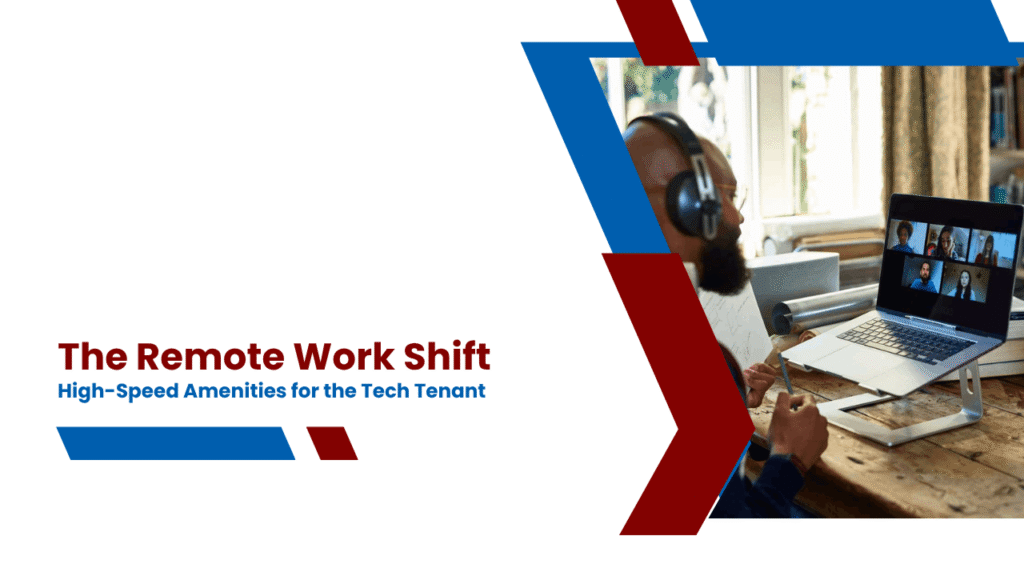
How can you attract the growing number of remote workers and tech-forward tenants in the San Francisco rental market?
By providing the high-speed amenities they need and want.
San Francisco’s rental market has always been tightly intertwined with the rhythms of the tech economy. We have seen the highs and the lows.
But with almost every industry creating a digital footprint in local and global markets and Artificial Intelligence (AI) economies on the rise, it’s clear that a structural shift has emerged. Remote and hybrid work are not temporary disruptions; and tech jobs are pulling people into the local rental market.
This is a trend rental property owners cannot ignore.
The traditional value drivers when we talk about location once included proximity to offices, transit access, and urban density. These things are still important, but in a large part those perks have been partially replaced by a new hierarchy of needs centered around connectivity, flexibility, and at-home productivity. Today’s tech tenant is not just renting a living space; they are renting a workplace, a studio, and a digital hub.
Understanding how to adapt your property to these expectations is critical for maintaining occupancy, maximizing rental income, and future-proofing your investment.
Our Summary:
|
The New Reality: Remote and Hybrid Work Are Here to Stay
The rise of remote work has continued, and it’s fundamentally altered housing demand across San Francisco. Even as some companies return to in-office operations, hybrid schedules dominate, often allowing employees to work from home two to four days per week.
This has reshaped renter priorities in several key ways:
- Tenants no longer need to live within walking distance of an office
- They are placing greater emphasis on comfort, space, and functionality
- The home must now support sustained professional productivity
Research from the Federal Reserve Bank of San Francisco indicates that a substantial share of the workforce continues to work remotely at least part-time, making this a long-term structural shift rather than a temporary trend.
At the same time, San Francisco’s tech-driven housing cycles remain intact. When hiring surges, especially in emerging sectors like AI, demand and rents rise quickly, intensifying competition for high-quality, well-equipped rentals.
For landlords, this means there’s a new standard when it comes to remaining competitive in this market.
What Do Tech Tenants Want Now?
The modern San Francisco tech renter is highly specific in their expectations. Remote work has introduced a new set of “must-have” amenities that go beyond traditional considerations.
- High-Speed, Reliable Internet (Non-Negotiable)
If there is one amenity that defines the remote work era, it is connectivity.
Tech tenants depend on:
- Fiber or gigabit internet speeds
- Low latency for video conferencing
- Stable connections for cloud-based tools and large data transfers
High-speed internet is perhaps something that you left for tenants to provide themselves once they moved in. Internet service is not a utility; and it’s not a habitability requirement. But tenants today see this as infrastructure. Listings that highlight connectivity and high-speed internet services will immediately get the attention of tech-driven tenants.
- Dedicated Workspaces
The demand for space has increased dramatically. Tenants are actively seeking office space, which can sometimes look like a separate room or an alcove. Layouts that allow for dual monitors and ergonomic setups are important and natural lighting for video calls is a huge plus.
- Acoustic Privacy and Sound Control
Remote work requires concentration and frequent video calls. As a result, renters value:
- Soundproofed walls or quiet building construction
- Units away from street noise
- Thoughtful layouts that reduce internal noise bleed
Noise complaints that might have been tolerable many years ago are now deal-breakers for tenants.
- Smart Home and Tech-Forward Features
Tech tenants expect their living space to match their professional environment. Popular smart home tech updates and amenities include:
- Smart thermostats and lighting
- App-controlled security systems
- Built-in charging stations and cable management
These upgrades signal a property that understands its audience.
- Flexible and Multi-Functional Layouts
The modern unit must support multiple roles. It’s an office during the day and a living space in the evening. Open floor plans, movable partitions, and adaptable furniture arrangements are increasingly desirable.
Does Location Still Matter in the San Francisco Rental Market?
Yes. But it’s different. Location has not become irrelevant. It has simply evolved.
Remote work has reduced the premium placed on proximity to downtown offices, leading many renters to reconsider where they live. Instead, tenants now evaluate neighborhoods based on:
- Access to parks and outdoor space
- Walkability to cafes and “third places” for remote work
- Overall quality of life rather than commute time
Interestingly, hybrid work patterns mean tenants may still commute occasionally, but not daily. This creates a new balance: renters want livable, comfortable neighborhoods with optional but not mandatory proximity to work hubs.
The Rise of the “Home-as-Hub” Concept
One of the most important conceptual shifts for landlords to understand is this:
The home is no longer just where tenants live. It’s where they work and study and create.
This has several implications:
- Tenants are willing to pay more for functional upgrades
- Poor design or outdated infrastructure has a higher cost
- Retention improves when a unit supports productivity
Remote work has effectively increased the economic importance of housing. A well-designed rental is now directly tied to a tenant’s income and career success.
Strategic Upgrades for Property Owners
To attract and retain tech tenants, landlords in San Francisco should consider targeted, high-impact upgrades.
- Upgrade Connectivity Infrastructure. Install or advertise fiber internet availability and partner with ISPs to offer pre-installed service. Include Wi-Fi coverage enhancements for larger units
- Reconfigure Layouts. Convert underutilized spaces into office nooks and add built-in desks or shelving. Stage units with a clear “work zone” during showings
- Invest in Sound and Privacy. Upgrade windows for noise reduction and add door seals or acoustic panels where feasible.
- Embrace Smart Technology. Install smart locks for keyless entry and add energy-efficient smart thermostats. Offer app-based building access
Market your property differently. Your listing should explicitly speak to remote workers:
Pricing Power and Competitive Advantage
Properties that align with remote work needs can attract premium rents, even in fluctuating markets.
While remote work initially reduced demand in dense urban cores, the recovery has been selective. Units that meet modern expectations lease faster and at higher rates, while outdated properties struggle.
In a competitive market like San Francisco, differentiation is everything. High-speed amenities are the new baseline for attracting top-tier tenants.
What Does the Future Look Like?
We’re imagining hybrid stability and tech growth in San Francisco. Looking ahead, several trends are likely to shape the rental landscape:
- Hybrid work will remain dominant
- Tech sector growth (especially AI) will continue to drive demand
- Tenants will expect even more integrated digital living environments
Recent developments show renewed tech expansion in San Francisco, particularly in AI-driven firms, which could further increase demand for premium rentals.
FAQs: Preparing Your Rental for Tech-Friendly Tenants

- What is the most important upgrade I should make first?
Start with high-speed internet. If your property cannot support fast, reliable connectivity, other upgrades will have limited impact. - Do I need to renovate to attract remote workers?
Not necessarily. Small changes, like staging a workspace or improving lighting, can significantly increase appeal without major renovations. - How should I market my property to tech tenants?
Highlight features like internet speed, workspace areas, quiet environments, and smart home upgrades in your listing description. - Are tech tenants willing to pay more for these amenities?
Yes. Many are willing to pay a premium for properties that enhance productivity and comfort, especially in competitive markets. - What type of layout is most attractive right now?
Units with an extra bedroom, den, or flexible space that can be converted into a home office are in highest demand. - Should I target fully remote or hybrid workers?
Both. But design your property for hybrid flexibility; tenants who split time between home and office need the most adaptable spaces.
The remote work shift has permanently redefined what it means to offer a “desirable” rental property in San Francisco.
Today’s tech tenants are looking for a space that supports their productivity, lifestyle, and digital connectivity. High-speed internet, functional layouts, and tech-forward amenities are no longer optional. Property owners who recognize and respond to these changes will not only attract better tenants but also position themselves for long-term success in an evolving market.
If you’d like some help preparing your San Francisco rental property for remote workers and tech-friendly tenants, contact us at Sharevest Property Management.
