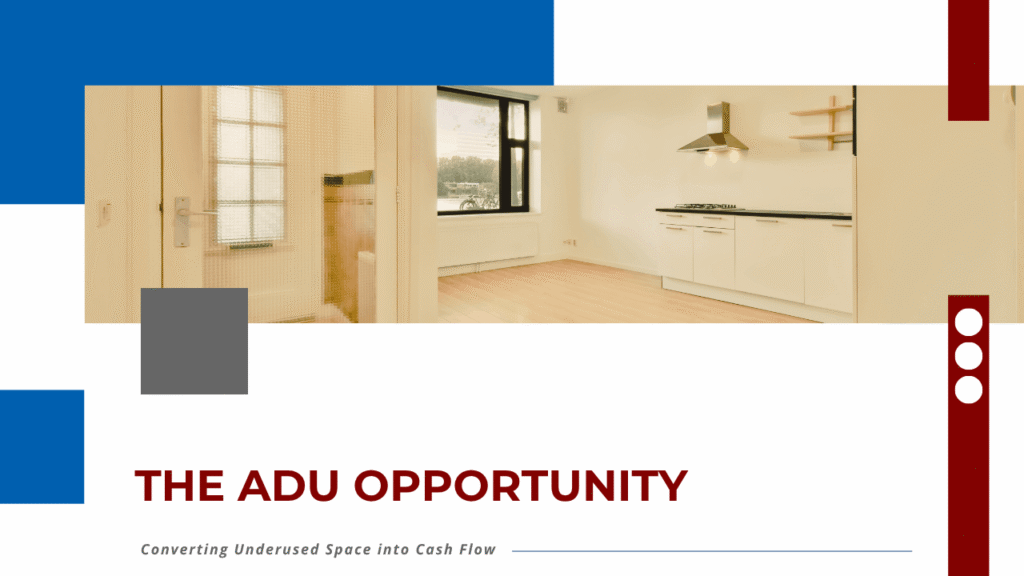
Is it possible that your rental property in San Mateo is sitting on untapped income potential?
You might have a detached garage or an oversized backyard. Maybe there’s a basement you’re not using that could be finished into a habitable residential unit.
We are talking about the potential in Accessory Dwelling Units. These are properties that can invite additional rental income without a new investment. For property owners who want to increase cash flow without buying another property in a high-cost market, ADUs have become one of the most practical strategies available.
As professional property managers in San Mateo, we have noticed that this is more than just a trend. It’s a structural shift in how rental property owners are building long-term portfolios, especially in high-demand, supply-constrained cities like ours. So, let’s explore this shift and decide whether there’s an opportunity for you to convert some unused space into a rental unit.
Our Takeaways:
|
Why Are ADUs Especially Ideal in San Mateo?
This is something that works here because of the high demand for rental homes and the lack of affordable inventory.
San Mateo continues to face strong rental demand driven by job growth across the Peninsula, limited housing supply, and rising purchase prices. For many landlords, buying another standalone investment property isn’t financially feasible right now. But adding a second unit to an existing property often is.
An ADU allows you to:
- Add a second rental stream without purchasing new land
- Increase total monthly income from a single parcel
- Improve long-term property value
- Create flexibility if you’re thinking about a long-term rental, family housing, or future downsizing
Many property owners already have the space; they just haven’t evaluated it from an income-producing perspective yet.
Types of Underused Space That Can Become an ADU
Are you unsure about whether your property qualifies? Here are the most common conversion opportunities:
- Garage Conversions. Detached garages are one of the easiest structures to convert. In many cases, the structure already exists, which simplifies permitting and reduces construction costs compared to building from scratch.
- Basement or Lower-Level Conversions. Homes with partial basements, crawl spaces with enough ceiling height, or unfinished lower levels often qualify for interior ADUs with the right upgrades.
- Backyard ADUs (Detached Units). If your lot has enough depth or side-yard clearance, a detached ADU can create the highest rental value because it offers more privacy to tenants.
- Converting Storage Structures or Workshops. Older sheds or detached structures may not be usable as-is, but they can sometimes be rebuilt or repurposed under current zoning rules.
The Process for Getting an ADU Approved in San Mateo
Once you have decided that you do have space for an ADU and you’d like to put it to use as a rental property, you’ll need approval. We have talked to many rental property owners assume the approval process is too complicated. In reality, it’s more structured than difficult, and we don’t recommend you shy away from it. As long as you follow the right steps, it can be fairly efficient and easy to navigate. We can also help, if you run into walls or questions. Here’s how it often shakes out when we’re walking property owners through the process.
Step 1: Evaluate Your Property’s Potential
Start by confirming:
- Lot size and layout
- Existing structures (garage, basement, detached space)
- Parking and access options
- Utility connections
An experienced contractor or ADU planner can usually tell within a short consultation whether the property is viable. We can make a referral if you’re looking for the right evaluation.
Step 2: Choose the Right Type of ADU
What will the ADU look like for you? It’s going to depend on what you’re staring with. Your choice will also depend on:
- Budget
- Rental strategy (long-term tenant vs. smaller unit for affordability)
- Available space
- Construction timeline
For many landlords, garage conversions offer the fastest return on investment, while detached ADUs generate the highest long-term income. Think about what you’re hoping to gain here, and how quickly you want to get rental income flowing. This may impact your decision-making.
Step 3: Design and Plans
Once the concept is clear, architectural plans are prepared. These plans must include:
- Floor layout
- Plumbing and electrical plans
- Structural details
- Compliance with building codes
This stage is where smart planning matters most. A well-designed small unit can rent faster and command higher rent than a poorly designed larger one. You want to keep the project cost-effective, but cutting corners will not help you with long-term financial and investment goals.
Step 4: Permit Submission and Review
Once the plans are complete, they will be submitted to the city for approval. The review process typically includes:
- Zoning compliance
- Safety and building code review
- Utility and infrastructure review
Most approvals don’t fail because the idea is bad. If they fail, it’s more likely because the plans weren’t prepared correctly. Working with professionals who understand local requirements can dramatically shorten approval time and increase your chances of getting that approval efficiently.
Step 5: Construction and Final Approval
Once permits are issued, construction can begin. As the work is being done, you can expect inspections to be scheduled throughout the process. And then, final approval is issued after completion.
At that point, the unit is legally rentable and can begin generating income.
How Can an ADU Help You Build a Rental Portfolio?
For many San Mateo landlords, ADUs can simply add one unit to an existing property. But for others, it’s about accelerating long-term portfolio growth. That’s the beauty of adding onto an existing property. Here’s what’s possible.
- You Increase Cash Flow Without Buying Another Property. Buying another investment property in San Mateo can require a large down payment. Adding an ADU typically costs significantly less while still creating a second income stream.
- You Improve Property Value. An income-producing second unit often increases the resale value of a property more than a standard renovation (like a kitchen remodel). Instead of spending money purely for aesthetics, you’re investing in something that generates monthly revenue.
- You Reduce Risk. Having two units on one property reduces your exposure to vacancy. If one tenant moves out, the other unit continues producing income.
- You Create Long-Term Flexibility. An ADU gives you options such as long-term rental income, housing for family members such as in-laws or adult children, a future downsizing strategy, and even multi-generational living.
That flexibility becomes increasingly valuable as property values and rental demand continue to rise.
Is Now the Right Time to Consider an ADU?
Given the current rental market and real estate market, now is the right time for most property owners.
Based on the data we’ve collected and the research we’ve looked at, the best time to explore an ADU is before the next major price surge in construction or interest rates. Even if you’re not ready to build immediately, understanding what your property can support puts you in a stronger position to plan ahead.
The biggest mistake landlords make isn’t building the wrong ADU. It’s waiting too long to explore the opportunity.
Frequently Asked Questions
Q: How long does it take to get an ADU approved in San Mateo?
A: Approval timelines vary, but many projects move through the process faster when the plans are prepared correctly from the beginning. Working with professionals familiar with local requirements helps avoid delays.
Q: Do I need a large lot to build an ADU?
A: Not necessarily. Many garage conversions and interior ADUs work well on standard-size lots. The key factor is how the existing space is used.
Q: What type of ADU generates the most rental income?
A: Detached ADUs typically rent for more because they offer more privacy. However, garage conversions often provide the fastest return because the construction cost is lower.
Q: Can I use the ADU for long-term tenants?
A: Yes. Many landlords build ADUs specifically to create stable long-term rental income.
Q: Is building an ADU better than buying another rental property?
A: In high-cost markets like San Mateo, many owners find that adding an ADU is a more affordable way to increase cash flow and grow their portfolio without taking on the financial risk of a new purchase.
 If you already own rental property in San Mateo, the opportunity isn’t just in what you currently rent. It’s potentially in the space you’re not using yet. An ADU turns unused square footage into long-term income, and for many landlords, it becomes the fastest way to grow from one unit to a small portfolio.
Contact us at Sharevest Property Management with any questions about your San Mateo rental, especially if you have some space and you’re considering an ADU. We can help.
